
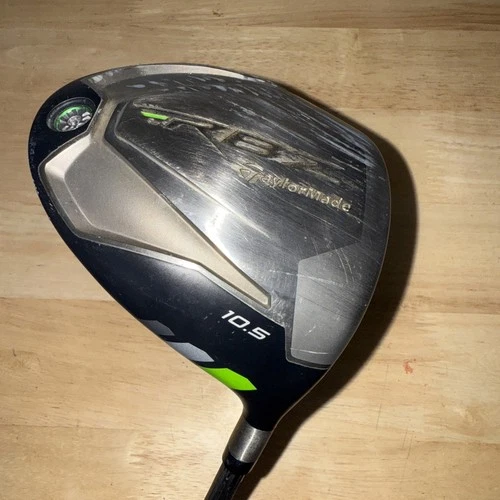
What the Speed Pocket Actually Fixes
Most golfers, including a lot of low-handicap players, do not strike the center of the face consistently on full swings; low-face contact is one of the most common miss patterns in the game, and it costs real ball speed on a rigid-faced driver. The RocketBallz cut a slot into the sole directly behind the face, letting that section of the face flex more freely on impact. On a strike low on the face, that flex recovers ball speed that would otherwise be lost, which is a genuinely different problem to solve than off-center forgiveness toward the heel or toe.
Paired with TaylorMade's Flight Control Technology hosel, which lets loft move 1.5 degrees in either direction and face angle move 3 degrees, the RocketBallz was also one of the more genuinely adjustable drivers of its generation, not just a fixed head with a marketing name.
Twelve Years Later: Still a Legitimate Option
What holds up: the Speed Pocket concept is not a gimmick that aged out. It is close in principle to the sole flex features still built into current game-improvement drivers, and a mishit low on the face on a RocketBallz genuinely does not lose as much ball speed as it would on a rigid, pre-Speed-Pocket design. The adjustability also still functions exactly as designed; there is nothing about the FCT hosel that has aged.
What does not hold up: overall ball speed and forgiveness on strikes toward the heel and toe, where a decade-plus of face and perimeter weighting improvements have moved the ceiling considerably. A well-fit current driver will simply be longer and more forgiving on a bad day than the RocketBallz can be, regardless of price.
RocketBallz vs. the SLDR That Replaced It
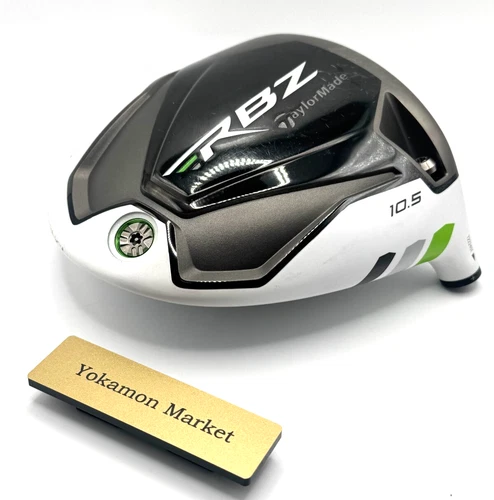
TaylorMade moved on from the RocketBallz platform in just two years, and the SLDR that followed it is a useful measuring stick for how much changed in that short window. Where the RocketBallz used the Speed Pocket to fix a specific mishit pattern, the SLDR attacked the problem from the other direction, lowering and moving forward the entire center of gravity so the whole head launched higher and spun less by default, not just on the strikes the Speed Pocket was designed to help. Reviewer testing at the time measured the SLDR gaining roughly 6 yards of average carry over the RocketBallz-era R1, a real jump packed into two model cycles. That gap is the honest answer to why the RocketBallz sits at budget pricing today while the SLDR still commands a real premium on the used market.
Rating the RocketBallz by 2026 Standards
| Rating Metrics | Our Rating |
|---|---|
| Distance | 3.0/5 |
| Forgiveness | 3.8/5 |
| Playability / Adjustability | 3.3/5 |
| Looks | 3.2/5 |
| Sound and Feel | 3.4/5 |
Scored against 2026 driver standards. The Speed Pocket's low-face forgiveness is the one category that holds up best against current expectations.
Pros
- Speed Pocket genuinely recovers ball speed on low-face mishits, not just marketing
- Real loft and face angle adjustability via the FCT hosel
- Very inexpensive relative to any current driver
- 460cc head with broad, forgiving forgiveness for its era
Cons
- Meaningfully behind current drivers on total ball speed and MOI
- No sliding or movable weight for draw/fade bias, only loft and face angle
- Used-market condition varies; face wear affects performance more than on newer cores
Who Should Buy a RocketBallz Now
This is a sensible pickup for a budget-conscious golfer who wants genuine, still-relevant forgiveness technology rather than a decade-old driver that simply happens to be cheap. It is a poor choice for anyone who could stretch to a Stealth or Qi10 instead; the gap in total performance between those and the RocketBallz is large enough that the price difference is easy to justify if the budget allows it at all.
Frequently Asked Questions
Is the TaylorMade RocketBallz driver still good in 2026?
For a budget option, yes. The Speed Pocket still genuinely recovers ball speed on low-face mishits, and the adjustable hosel still works as designed. It will not match a current driver's total ball speed or forgiveness on off-center hits, but it remains a legitimate choice for golfers who cannot or do not want to spend current-driver prices.
What is the Speed Pocket on the RocketBallz driver?
A flexing slot cut into the sole directly behind the face. It lets the face flex more on strikes low on the face, recovering ball speed that a rigid face would lose on that type of mishit.
How much does a used TaylorMade RocketBallz driver cost?
Typically $50 to $110 depending on shaft, loft, and condition, since the model has been discontinued for over a decade.