
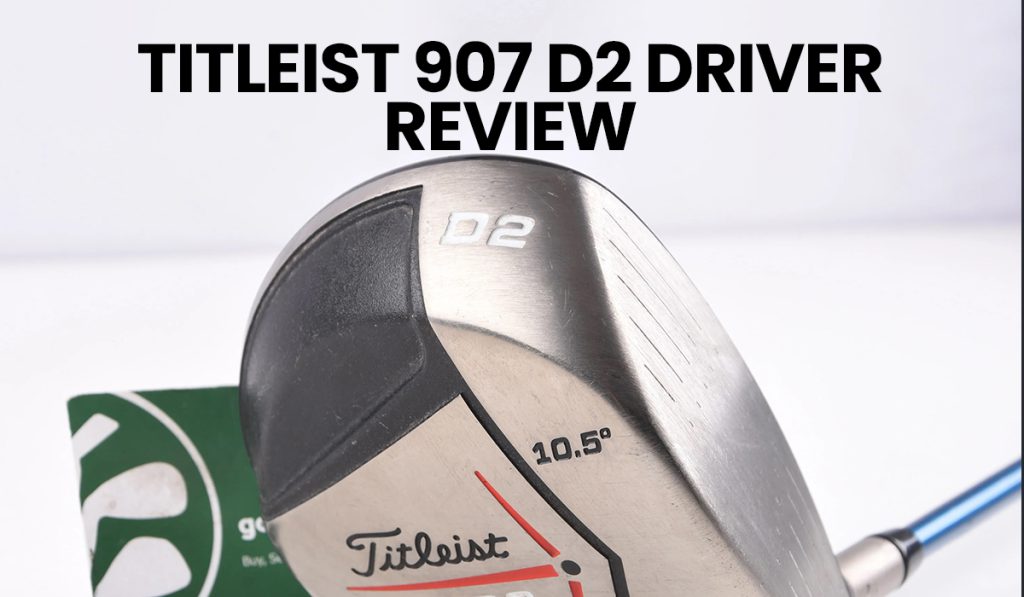
A Familiar Shape With Real Upgrades
The 907D2 wasn't just a cosmetic holdover. It carried the same optimized center-of-gravity work and the same tapered SP700 beta-titanium face as the D1, just wrapped in a shape more conservative players were used to seeing at address. That combination of "look normal, perform better" made it the more popular of the two 907 heads at retail.
Correction: this driver does not use Titleist's SureFit adjustable hosel; that system wasn't introduced until the 910 series arrived in 2011. The 907D2 has a fixed, non-adjustable hosel.
Look, Sound and Feel
Sound
The tapered SP700 face delivers the same crisp, solid strike sound as the 907D1, a confidence-inspiring tone that period reviewers preferred over the more muted feel of older 6-4-titanium-only heads.
Look
The traditional pear shape was a deliberate contrast to the D1's triangular head, a familiar silhouette that reassured more conservative players at address while still delivering the 907 line's forgiveness gains.
Feel
Reviewers described the 907D2 as offering a sense of control and stability through impact, with the classic weight distribution helping players square the face consistently.
Pros
- Traditional pear shape gives a confidence-inspiring look many players preferred over the D1's triangular head
- Tapered SP700 face promotes higher launch, lower spin
- Consistent, dependable performance widely praised by contemporary reviewers
Cons
- Fixed hosel, no loft/lie adjustability
- Long discontinued; only available secondhand
- Outperformed in every measurable way by any current driver
Who Should Use It?
- Players who prefer a traditional pear-shaped look over the 907D1's triangular profile.
- Collectors tracing Titleist's driver evolution from the 983K through the adjustable era.
- Budget secondhand buyers who don't need modern loft/lie fitting options.
Suitability by handicap
| High handicap golfers | Yes |
| Mid handicap golfers | Yes |
| Low handicap golfers | No |
Features and Benefits
Design and Aesthetics
The classic pear-shaped profile gave the 907D2 a confidence-inspiring, familiar look at address, distinguishing it from the more experimental D1 head shape.
Technology
The same tapered SP700 beta-titanium face as the 907D1, thinner near the crown and thicker toward the sole, carried over the higher-launch, lower-spin benefits into a more traditional shape.
Performance
Consistent and dependable, with optimal CG positioning delivering powerful yet controlled performance off the tee. Widely regarded as the more popular of the two 907 heads at retail.
Distance
The tapered face construction delivered real distance gains over Titleist's older, uniform-thickness driver faces, particularly for players who struggled with launch.
Forgiveness
The 460cc pear-shaped head carried forward the forgiveness gains of the 907 line without the D1's more aggressive triangular perimeter weighting.
Flight Accuracy
The classic pear shape and optimized CG combined for a controlled, predictable ball flight that suited players who valued consistency over raw forgiveness.
Who Is This For Today?
Like the 907D1, this is a legacy piece rather than a realistic modern purchase, useful mainly for understanding the shape and material choices Titleist was testing on the way to the fully adjustable 910, 913, and later GT/GTS drivers.
Conclusion
The 907D2 is the more conventional of the two 2007 Titleist heads, and it earned a reputation as a dependable, high-launching driver in its day. Two decades later it belongs in the brand's history, not in an active bag.