
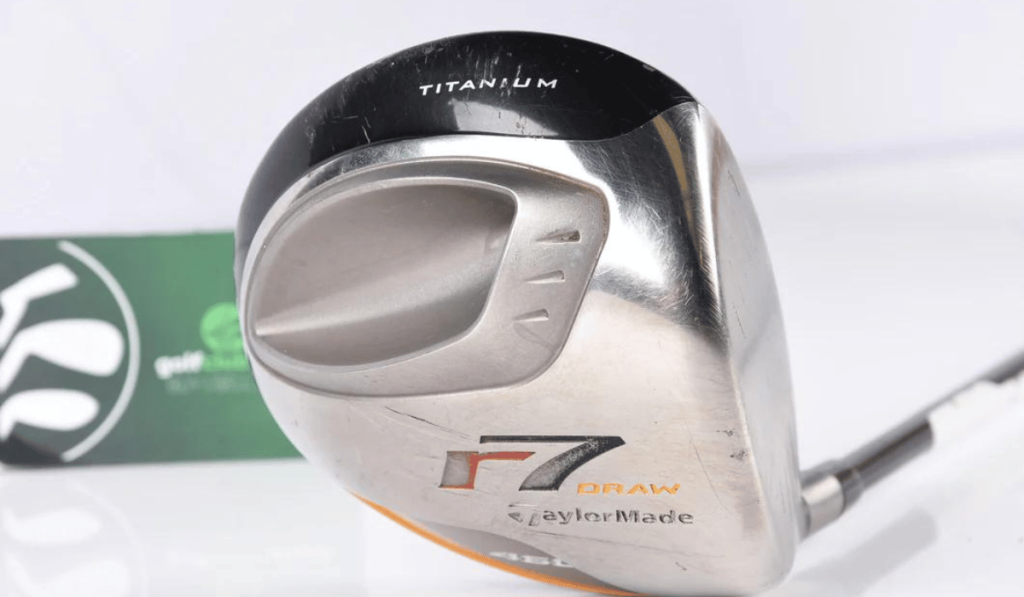
A Driver Built to Fix One Problem
The R7 Draw's heel-biased weighting physically shifts the center of gravity to help square the clubface at impact for players who habitually leave it open, the single most common cause of a slice. It wasn't marketed as a distance club or a tour-preferred head; it was marketed, plainly, as the fix for a specific swing fault.
Inverted Cone Technology
Alongside the draw bias, the R7 Draw carried TaylorMade's Inverted Cone Technology on the face, a design that expanded the effective hitting area, so even the mishits that come with an in-progress swing change stayed more playable.
Look, Sound and Feel
Sound
A crisp, somewhat muted "thwack" (neither loud nor jarring) gave the R7 Draw a consistent, confidence-inspiring sound at impact.
Look
A traditional clubhead shape with a polished black finish and minimal graphics, a deliberate departure from flashier, more graphic-heavy designs of the era.
Feel
A secure, comfortable grip and well-balanced construction gave players a smooth, controlled swing motion and clear feedback on strike quality.
Pros
- Genuinely effective slice correction via heel-biased weighting
- Inverted Cone Technology adds real forgiveness on off-center hits
- Classic, uncluttered design and reasonable original pricing
Cons
- Poor fit for players who already draw the ball or want to work shots
- No modern adjustability, fixed weighting and loft
- Long discontinued; collector/secondhand market only
Who Should Use It?
- Golfers who consistently fight a slice or fade off the tee.
- Players who prioritize accuracy and reliability over shot-shaping or extreme distance.
- Those who want a classic, uncluttered driver look.
Suitability by handicap
| High handicap golfers | Yes |
| Mid handicap golfers | Yes |
| Low handicap golfers | No |
Features and Benefits
Design and Aesthetics
A traditional clubhead shape with a clean, uncluttered black finish, understated compared to more graphic-heavy competitors of the mid-2000s.
Technology
Heel-biased draw weighting redistributes mass to counter an open clubface at impact, paired with Inverted Cone Technology to expand the effective hitting area.
Performance
Reliable and consistent, specifically for golfers fighting a slice. The R7 Draw did one job and did it well, rather than trying to be a do-everything head.
Distance
Not marketed as a distance club; the focus was controlling and straightening shots, though it still delivered respectable yardage for its era.
Forgiveness
Highly forgiving on off-center hits, with the draw bias specifically reducing the severity of a slice on mishits.
Flight Accuracy
This is where the R7 Draw genuinely excelled: its draw-bias technology delivered a more controlled, predictable ball flight for players who needed it most.
Who Is This For Today?
A dated but honest piece of TaylorMade history. Modern anti-slice designs like the current Qi4D Max do the same job with far more forgiveness and adjustability, but the R7 Draw is a good reminder that "fix my slice" drivers have real roots.
Conclusion
The TaylorMade R7 Draw wasn't the flashiest or most advanced driver of its time, but it delivered exactly what it promised: a time-tested, dependable fix for golfers who needed to stop slicing the ball.