
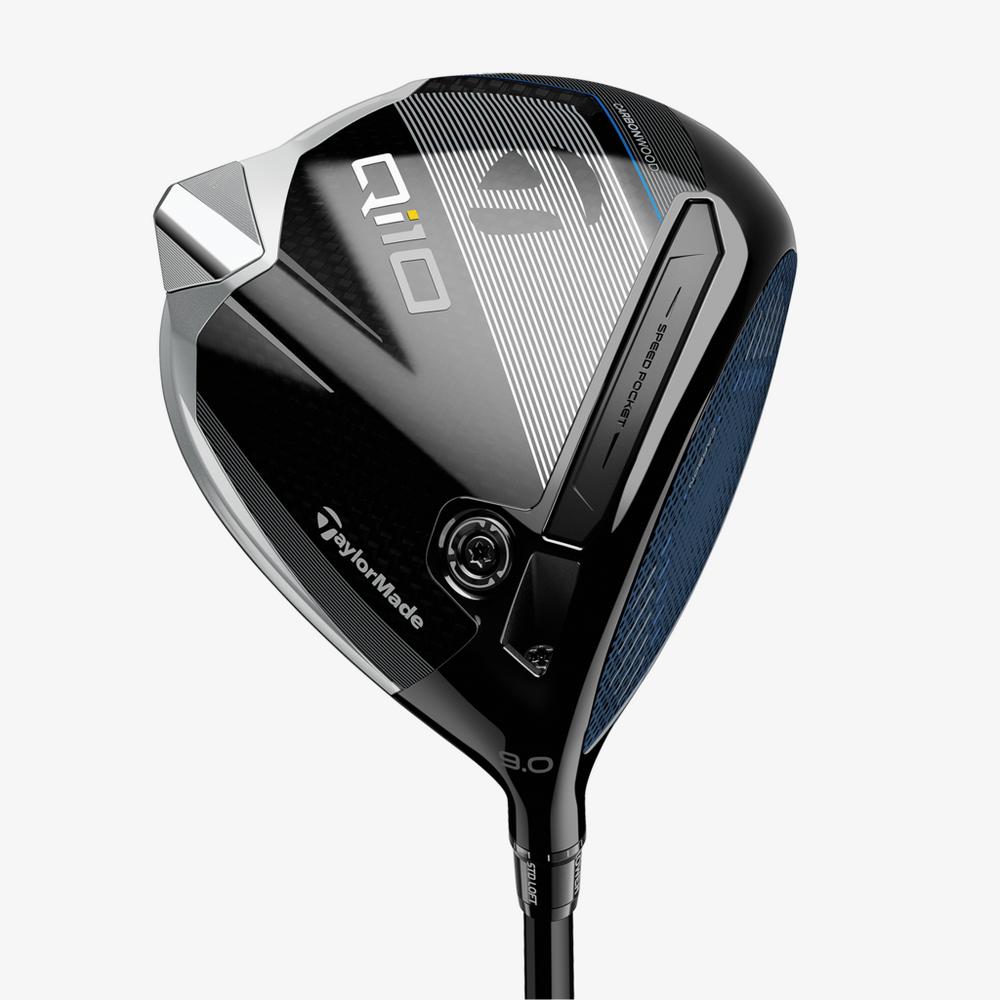
Where the MOI Actually Came From
The Qi10's headline number, up to 10,000 g/cm2 of combined MOI on the Max model, did not come from one single innovation; it came from TaylorMade finally being able to move enough mass to the perimeter of the head, and the Infinity Carbon Crown is what made that possible. Pushing the carbon crown closer to the topline and extending it to cover 97 percent of the head's surface freed up discretionary weight that previous generations still had locked into the crown structure itself. That freed weight went to the perimeter, which is the only place added mass actually increases forgiveness on off-center strikes.
The third-generation 60X Carbon Twist Face carried over the core idea from the original Stealth, a lighter, larger carbon face than titanium allows, but refined it further for center-strike ball speed without giving up the mishit protection the larger face provides.
Qi10 vs Qi10 LS vs Qi10 Max
The standard Qi10 is the balanced model, aimed at the widest range of swing speeds and skill levels. The Qi10 LS trades some of that forgiveness for lower spin and a more compact, tour-preferred shape, aimed at faster swing speed players who do not need maximum MOI. The Qi10 Max pushes the forgiveness end of the spectrum as far as it goes, and is the model responsible for that 10,000 g/cm2 figure; it is the right choice for most mid-to-high handicap golfers who value consistency over ultimate shot-shaping control.
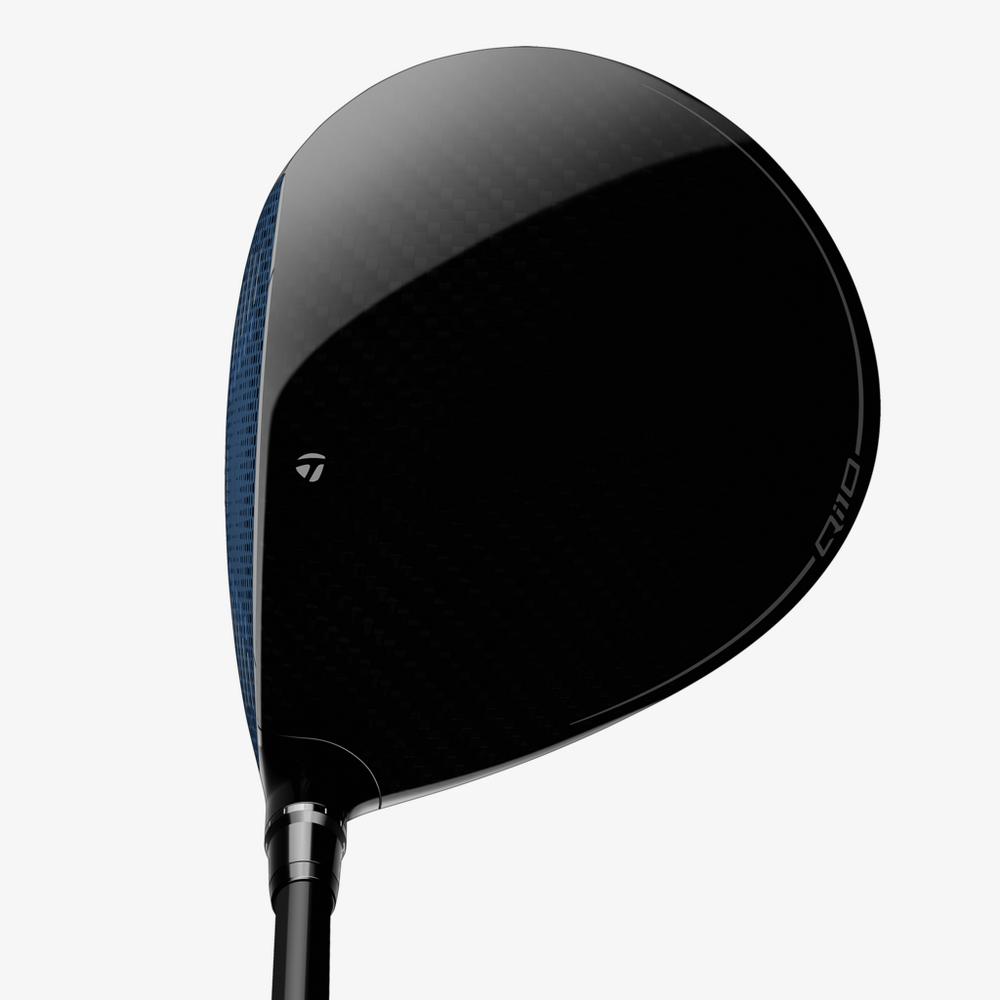
Specs and Adjustability in Detail
The Qi10 kept TaylorMade's standard loft sleeve, allowing 2 degrees of adjustment in either direction from the stock loft, paired with a sliding weight track on the LS and Max models for heel-to-toe CG bias, similar in concept to the system the SLDR introduced a decade earlier but refined with a wider range of positions and a lower-profile track that does not add unnecessary height to the sole. Stock lofts run from 8 to 12 degrees depending on model, which combined with the sleeve's range covers the vast majority of fitting outcomes without needing a separate head for high and low swing speeds.
Rating the Qi10 by 2026 Standards
| Rating Metrics | Our Rating |
|---|---|
| Distance | 4.6/5 |
| Forgiveness | 4.8/5 |
| Playability / Adjustability | 4.5/5 |
| Looks | 4.4/5 |
| Sound and Feel | 4.3/5 |
Scored against current 2026 driver standards, including the Qi4D that replaced it. The gap between these two generations is small enough that the Qi10's discounted price makes it the better value in most fittings.
Pros
- Genuinely class-leading MOI at release, still very high by current standards
- Refined third-generation carbon face improves on the original Stealth's center-strike speed
- Three-model lineup covers a real range of swing speeds and priorities
- Now discounted since Qi4D replaced it, making it a strong value pick
Cons
- No longer TaylorMade's current flagship, which affects resale and perceived status, not performance
- Qi4D's refinements, while incremental, do measurably improve on it
- New stock is becoming harder to find as retailers clear remaining inventory
Was Upgrading to Qi4D Actually Worth It
For most golfers, no, not on performance alone. TaylorMade's own positioning of Qi4D emphasizes refinement over reinvention, and the fundamental architecture, carbon face plus carbon crown plus perimeter weighting, is the same idea the Qi10 already executed well. A golfer currently on a Qi10 has little performance reason to chase the newer model; a golfer shopping now, with both available at very different price points, gets most of the Qi4D's benefit from the Qi10 at a real discount.
Frequently Asked Questions
Is the TaylorMade Qi10 still worth buying now that Qi4D exists?
Yes. The Qi10 and Qi4D share the same core architecture, and the Qi4D's improvements are refinements rather than a fundamental redesign. With the Qi10 now discounted since Qi4D took over as the flagship, it is a strong value option that gives up little real performance.
What is the difference between Qi10, Qi10 LS, and Qi10 Max?
Qi10 is the balanced, all-around model. Qi10 LS is more compact with lower spin, built for faster swing speeds and better players. Qi10 Max maximizes MOI and forgiveness, making it the best fit for mid-to-high handicap golfers.
How much MOI does the TaylorMade Qi10 Max have?
Up to 10,000 g/cm2 combined across horizontal and vertical MOI, which was the highest figure in TaylorMade's lineup at the time of its release in 2024.
Tour Players Using the Qi10
Scottie Scheffler has stayed with the Qi10 through the 2026 season rather than switching to the newer Qi4D, and Nelly Korda played a Qi10 Max before moving to the Qi4D at the start of 2026, direct evidence that the model still holds up against TaylorMade's own current flagship at the highest level.