
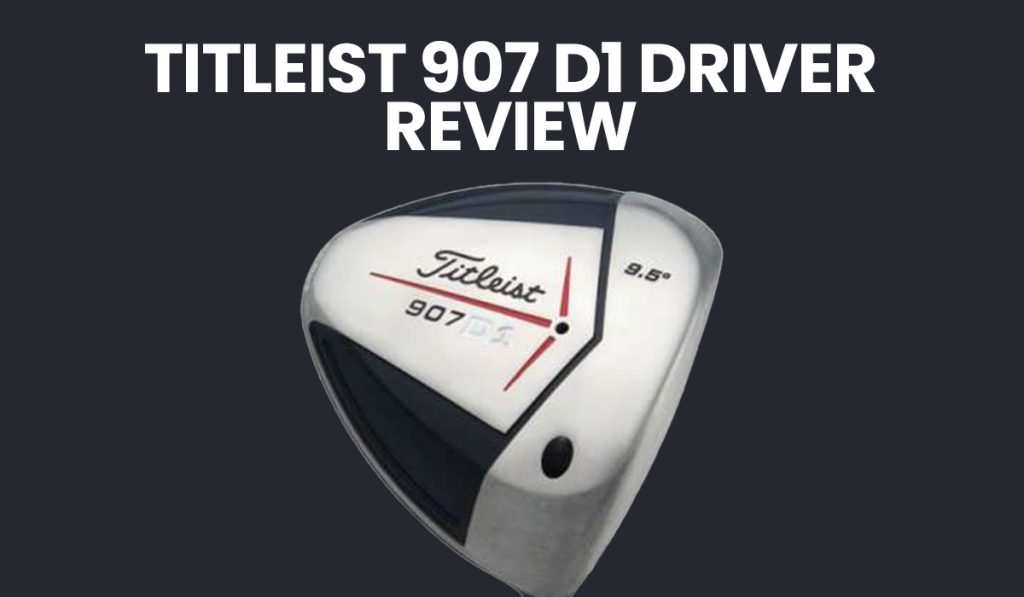
Why the Triangular Head?
The 907D1's triangular shape was a deliberate MOI play: pushing more mass to the perimeter of a wider, flatter footprint to resist the clubface twisting on off-center strikes. Titleist paired it with the more conventional pear-shaped 907D2 in the same release so fitters could put both head shapes in a player's hands and let ball flight, not marketing, decide which one fit. Independent reviewers at the time called it the best driver Titleist had made up to that point, delivering both power and forgiveness without the "trampoline face" sound backlash some square-headed competitors got.
Look, Sound and Feel
Sound
The tapered SP700 face produces a crisper, more solid strike sound than the uniform-thickness faces on earlier Titleist drivers like the 983K, firm without being harsh, in line with what period reviewers described as a confidence-inspiring impact tone.
Look
The triangular profile is the defining visual trait: a wider, flatter footprint than any prior Titleist driver, giving it a distinctly modern (for 2007) look at address that stood out from the brand's traditionally pear-shaped heads.
Feel
Reviewers at the time praised the balance between power and forgiveness the head delivered: a stable, controlled feel through impact that didn't sacrifice the tour-level workability Titleist drivers were known for.
Pros
- High MOI for its era, genuinely more forgiving than Titleist's prior 983/905 heads
- Tapered face promotes higher launch for moderate swing speeds
- 460cc footprint gives a confidence-inspiring look at address
Cons
- No adjustability, fixed loft/lie, unlike every Titleist driver since the 910 series
- Long discontinued; only available secondhand
- Reviewers at the time noted a high price relative to the performance gain
Who Should Use It?
- Collectors and enthusiasts interested in a genuine milestone in Titleist's driver history.
- Players who prioritize a stable, confidence-inspiring look at address over adjustability.
- Budget secondhand buyers who don't need modern loft/lie fitting options.
Suitability by handicap
| High handicap golfers | Yes |
| Mid handicap golfers | Yes |
| Low handicap golfers | No |
Features and Benefits
Design and Aesthetics
The triangular head was a genuine design departure for Titleist: a wider, flatter shape built to increase MOI without abandoning the brand's tour-oriented styling.
Technology
The tapered SP700 beta-titanium face, thinner near the crown and thicker toward the sole, was the core engineering story, designed to promote higher launch and lower spin than a uniform-thickness face.
Performance
Independent reviewers rated it as Titleist's most forgiving driver to that point, combining real power with genuine off-center consistency.
Distance
The tapered face construction helped moderate swing speed players get the ball airborne more easily, translating to real carry distance gains over Titleist's more compact prior heads.
Forgiveness
The triangular shape's perimeter weighting was the clear forgiveness story: a genuine MOI increase over the pear-shaped 983K and 905-series heads that came before it.
Flight Accuracy
The higher MOI reduced clubface twisting on off-center hits, keeping ball flight more consistent than Titleist's smaller, more compact prior-generation drivers.
Who Is This For Today?
Realistically, the 907D1 is a collector's or budget secondhand piece rather than a competitive option in 2026. Modern drivers from any major brand outperform it in ball speed, forgiveness and adjustability. It's most relevant now as historical context for how Titleist's driver technology progressed toward today's GT and GTS series.
Conclusion
The 907D1 mattered in 2007 as proof that Titleist could build a genuinely forgiving driver without abandoning its reputation for tour-level workability. As a modern purchase it's outclassed, but it's a real milestone in the brand's driver history.