
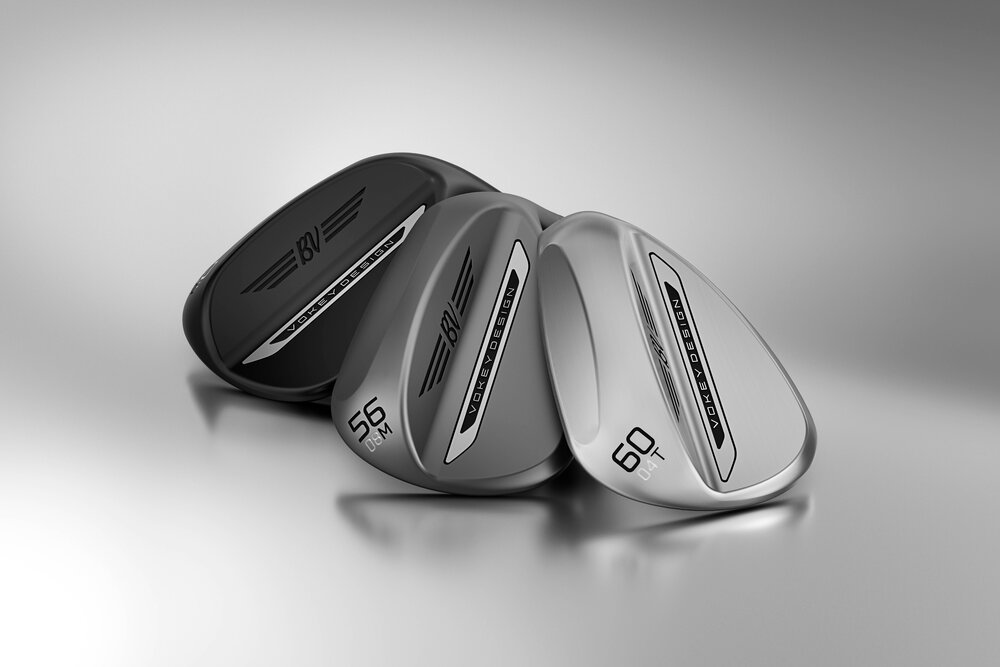
Vokey SM11 vs. SM10: What Actually Changed
The substantive engineering change in the SM11 is center of gravity consistency, not the grooves, though the grooves are what Titleist's marketing foregrounds since that is the part a golfer can visibly inspect. On the SM10 and earlier generations, CG location shifted slightly between grind options at the same loft, a byproduct of different sole grinds removing metal from different areas of the head. Titleist re-engineered the internal mass distribution on the SM11 so every grind at a given loft now shares an identical CG. In practice, that means moving from an S grind to a K grind at 56 degrees to suit bunker-heavy course conditions no longer introduces a change in strike feel or energy transfer: the grind change affects sole-to-turf interaction only, not the fundamental behavior of the clubhead.
The groove revision is real, if smaller in impact than the CG work. Titleist states the SM11's grooves carry 5 percent more volume than the SM10's, paired with a new directional face texture (secondary micro-grooves angled toward the leading edge) intended to preserve spin consistency when grass or moisture sits between the face and the ball, not only on a clean strike off a mat. This should be read as an incremental improvement tied to lie and weather conditions rather than a change that alters full-swing numbers from a clean fairway lie. Its effect is most apparent on the shot a golfer would rather not have to hit: a flier lie in first cut, or greenside turf still carrying morning moisture.
Vokey SM11 Grinds Explained: F, S, M, D, K, T
Choosing a Grind for Your Swing
For a golfer who has not been through a proper wedge fitting, the loft number stamped on the sole is the least consequential spec on the club. Six grinds ship across the SM11 line, F, S, M, D, K, and T, because a given loft plays entirely differently depending on how much heel, toe, and trailing-edge material sits behind it. A K grind, with its wide sole and higher bounce, is built for a player with a steeper attack angle who needs the sole to resist digging into soft turf or sand. An F grind, with minimal bounce and more heel-and-toe relief, suits a shallower, sweeping strike on firmer turf. Selecting the wrong grind for one's actual swing renders the loft number largely irrelevant; the mis-fit shows up as inconsistent turf interaction well before it shows up as a yardage problem.
What's New in the SM11 Lineup
A new 0.6K grind, a K-grind sole shape at reduced bounce, is the configuration Scottie Scheffler plays on tour, built for a shallow-attack player who still wants a K sole's forgiveness through the turf without the added bounce. Separately, the standard K grind's bounce was reduced from 14 to 12 degrees across the 58- and 60-degree lofts, a change made in response to tour feedback that the prior bounce caught excess sand on firm, dry bunker conditions. Neither change is a reason for a recreational player to seek out the new model specifically, but both are evidence that Vokey's grind program continues to be shaped by direct player feedback, which is the more durable reason to trust the brand.
Where the Difference Shows, and Where It Doesn't
On full-swing gap shots from clean fairway turf, the difference against a properly fit SM10 is not meaningful. A gapping scheme that already performs correctly will not improve because of this update. The difference is concentrated in shots played from imperfect conditions. On chip shots from a tight, slightly damp lie near the green, where face-to-ball contact is compromised, the added groove volume held spin more reliably than expected for what is otherwise an incremental release. The gain was not dramatic: it was the difference between a shot that checks and releases an additional foot versus one that checks twice and holds. In greenside bunkers, the lower-bounce 0.6K configuration allowed a more aggressive open-face setup on a firm, sun-baked lie without the leading edge catching the ball, a scenario in which the standard 12 to 14 degree K bounce would have been less forgiving.
Feel and sound at impact are functionally unchanged from a well-worn SM10. Titleist did not alter the forging process or the underlying feel profile, which is a point in the SM11's favor for any golfer whose attachment to prior Vokey generations was built on feel rather than technology.
Pros
- Uniform center of gravity across all six grinds at a given loft removes one variable from grind selection
- Measurable groove-volume increase improves spin retention specifically on damp or grass-affected lies, not just clean strikes
- 27 loft/grind/bounce configurations now cover both low-bounce, shallow-attack players and high-bounce diggers without compromise
- Feel and forged construction are unchanged from the SM10, so existing Vokey players retain their touch around the green
- The new 0.6K grind gives better players a legitimate low-bounce, wide-sole option for firm bunker conditions
Cons
- No measurable gain on standard full-swing gap shots from clean turf over a properly fit SM10
- $199 steel MSRP is a real price increase over prior generations, notable when replacing a full three-wedge set
- Improvements are concentrated in edge-case lies and bunker conditions rather than every shot type
- Capturing the CG and grind benefits requires an actual fitting; buying by loft number alone forfeits most of the upgrade
The Honest Downside
A golfer already playing SM10s that are correctly fit, right grind, right bounce, right lofts for the existing gapping, has no performance case for replacing them immediately. The CG consistency benefit matters most to a player who carries two grinds at the same loft for different course conditions, a small minority of golfers even at low handicaps. For everyone else, this is a wedge to buy when the current set is worn out or when building a set from scratch, not a wedge that makes a functioning setup obsolete. The price increase to $199 for steel is in line with a tour-level wedge in 2026, but it is a real factor when outfitting all three wedge slots at once rather than replacing a single club.
Who Should Buy the Vokey SM11
A golfer due for a wedge fitting regardless of this release, whether that means a new bag, worn grooves, or an unaddressed gapping problem, should default to the SM11 over sourcing remaining SM10 stock, given the more complete grind lineup and the fitting benefit of consistent CG. Grind and bounce should be selected before loft, based on actual attack angle and typical turf conditions rather than the number stamped on the sole. A golfer already playing a properly fit SM10 should continue doing so until it is genuinely worn; this release does not obsolete the prior generation.
Frequently Asked Questions
Is the Titleist Vokey SM11 worth upgrading from the SM10?
Not for performance alone if your SM10s are already properly fit. The SM11's main gains, consistent center of gravity across grinds and higher groove volume, show up mainly on damp or imperfect lies and in bunker play, not on standard full-swing shots. Buy the SM11 when your current wedges are worn out or you're building a set from scratch, not to replace a setup that already works.
What is the difference between Vokey SM11 and SM10?
The SM11 gives every grind at a given loft an identical center of gravity, where the SM10 had slight CG shifts between grinds. It also carries 5 percent more groove volume and a new directional face texture for better spin on damp or grassy lies. Feel, sound, and the forging process are unchanged from the SM10.
What grind should I choose on the Vokey SM11?
Choose based on attack angle and typical turf conditions, not the loft number. A K grind (wide sole, higher bounce) suits a steeper attack angle and soft turf or sand. An F grind (minimal bounce, more heel-and-toe relief) suits a shallower, sweeping strike on firmer turf. A proper wedge fitting is the only reliable way to confirm which grind matches your swing.
How much does the Titleist Vokey SM11 cost?
The Vokey SM11 retails for $199 with a steel shaft, $209 with graphite, and $229 for a raw finish custom order.